We were on the ground at Mobile World Congress 2025. AI moved from slideware to working demos. Here are the highlights, the sessions that mattered, and what teams should do next.
Mobile World Congress 2025: on the ground at MWC and the Talent Arena
This week, my colleagues and I attended Mobile World Congress 2025, the world’s largest tech event, and the Talent Arena. Unlike previous visits as a student, I went as a professional.
The main difference from my last time wasn’t AI’s existence. It was the surge in its potential and possibilities. Practically every company and conference session focused on AI.
In this article, I’ll answer key questions that arose from MWC 2025. How are enterprises applying AI? Which improvements have they made so far? Are we making good use of it? Additionally, beyond AI, which technology advances were shown? Let’s check them out.
How AI is being used?
Over these days, I saw multiple applications of AI—from sports to healthcare. They showed its versatility and huge potential across every field.
IBM stand
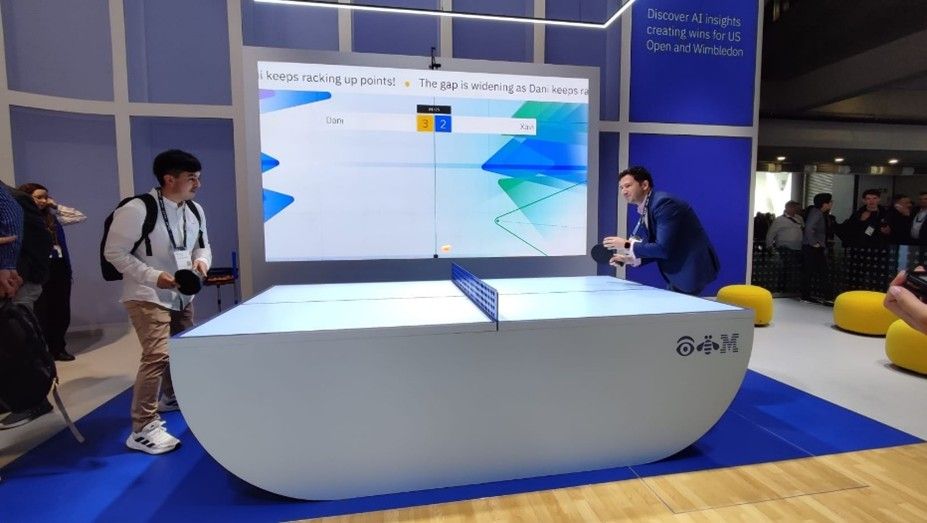
At the IBM stand, we learned about their AI platform, watsonx. They showed how their model, used at the US Open and Wimbledon, generates a full tennis match summary in just 15 minutes. It accelerates the work of commentators. Moreover, teams can configure the tone for more enthusiastic or more professional commentary.
There was a table-tennis setup to try it. Unfortunately, none of our colleagues managed a win.
Salesforce stand
At the Salesforce stand, we learned how MuleSoft powers integrations on the Salesforce side. Often, not all the data lives in Salesforce. Instead, we must consume it from external sites or platforms. Therefore, we build an API with MuleSoft.
This API handles the processes needed to retrieve the required information. After developing it, we can publish and connect it via the recently released Salesforce API Catalog. Then teams can discover and reuse it.
It doesn’t stop there. The API is reusable and can be consumed by Agentforce agents. Agentforce is one of Salesforce’s AI solutions that lets users create agents easily. These agents interpret natural language and perform actions to fetch data. They rely on predefined topics and parameters that the user sets, which define each agent’s mission and limits. As a result, low-code and functional users can create an agent and use the API without friction.
Agents can pull information from many sources, from a website to a PDF, which expands the possibilities. They also showed an Agent Accelerator that created an agent for us in a few minutes using our website’s content. Moreover, it isn’t limited to the Salesforce platform. It can be consumed via API, which broadens how you deploy and use it across systems.
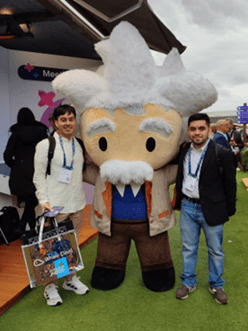
Finally, we met Einstein, another Salesforce AI solution that helps businesses enhance customer relationship management.
LG U+ stand
We stopped at the LG U+ stand, where they presented “ixi,” their AI model. It can act as a personal agent across multiple areas. For example, it checks what’s in your fridge and what’s missing to complete a recipe. They also showed robots that understand voice commands and serve water. In addition, we spoke with Naevis, their conversational AI. It answered our questions clearly and convincingly.
KDDI stand
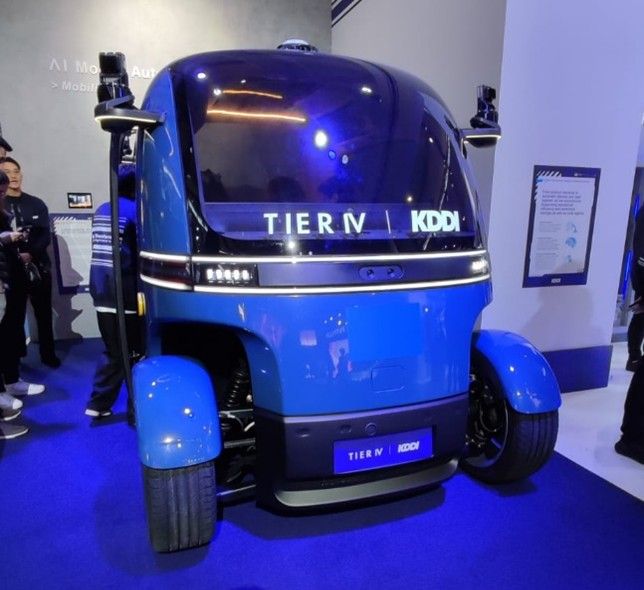
We saw an autonomous electric vehicle from KDDI, intended for taxi use in the near future. They have already run tests in private areas. I’m eager to see a public release. I’m curious how it will perform in real-world scenarios.
SK Telecom stand
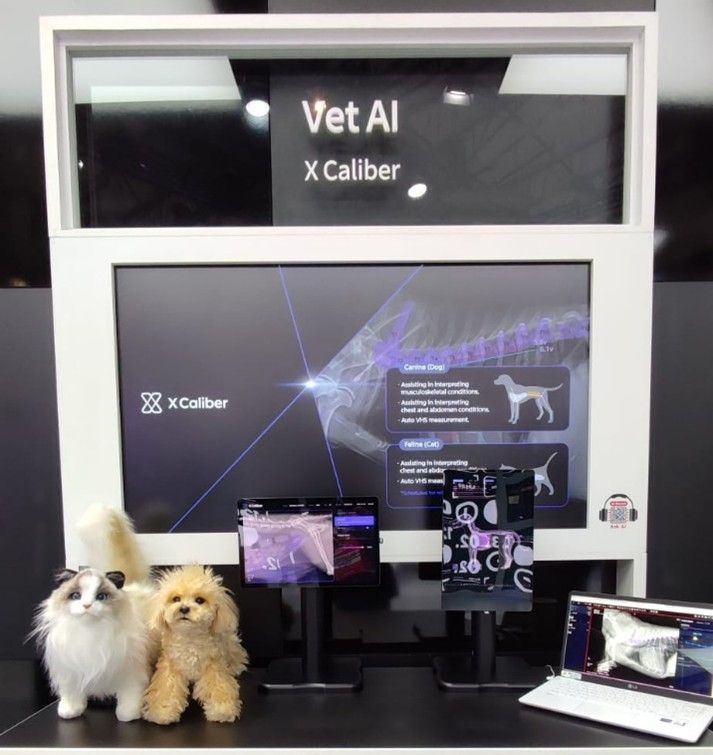
We visited the SK Telecom stand and explored several AI applications. One that stood out was Vet AI.
It analyzes pet X-ray scans and flags abnormalities. It also highlights likely diseases and marks their locations. According to SK Telecom, reliability exceeds 96%. As a result, vets can complete assessments faster and with greater confidence.
Large Language Models (LLMs) workshop
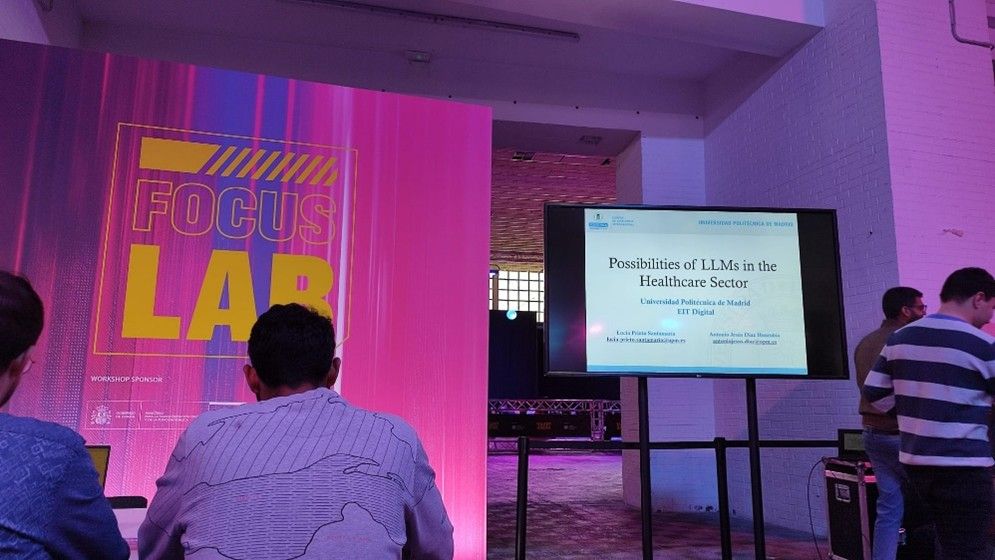
We attended a workshop on applying large language models (LLMs) to healthcare. It was engaging. In their example, they used ChatGPT and other generative AIs with tailored instructions to classify diseases. The approach relied on UML semantic types and produced codes and descriptions for each disease.
However, the results weren’t reliably accurate. When prompts or context grew too large, the models produced classifications that do not exist—classic AI hallucinations. As a result, the pipeline yielded incorrect outputs.
What were the conferences about?
This is the most interesting point of this blog in my opinion, as I was able to attend to multiple conferences. Almost all of them were AI related, as it is the hottest topic, and it gave us multiple points of view about its usage and why it is so relevant now.
The Double-Edged Sword: Will AI Hinder or Accelerate Diversity?
The first session I attended—“The Double-Edged Sword: Will AI Hinder or Accelerate Diversity?”—asked whether today’s models truly support inclusion. Speakers stressed the many factors at play: culture, gender, disability, and more. They pointed to contract and hiring systems where AI can misidentify faces or screen out qualified candidates with disabilities—clear signs of bias. My takeaway: we need diverse teams and data when designing and training AI, so solutions don’t exclude anyone. In the end, the impact of AI depends on how—and by whom—it’s built.
The link between human creativity and artificial intelligence
I also had the pleasure of attending Garry Kasparov’s talk, “The link between human creativity and artificial intelligence.” It was a sharp reminder that we shouldn’t fear AI. Instead, we should use it as a tool to drive progress for society.
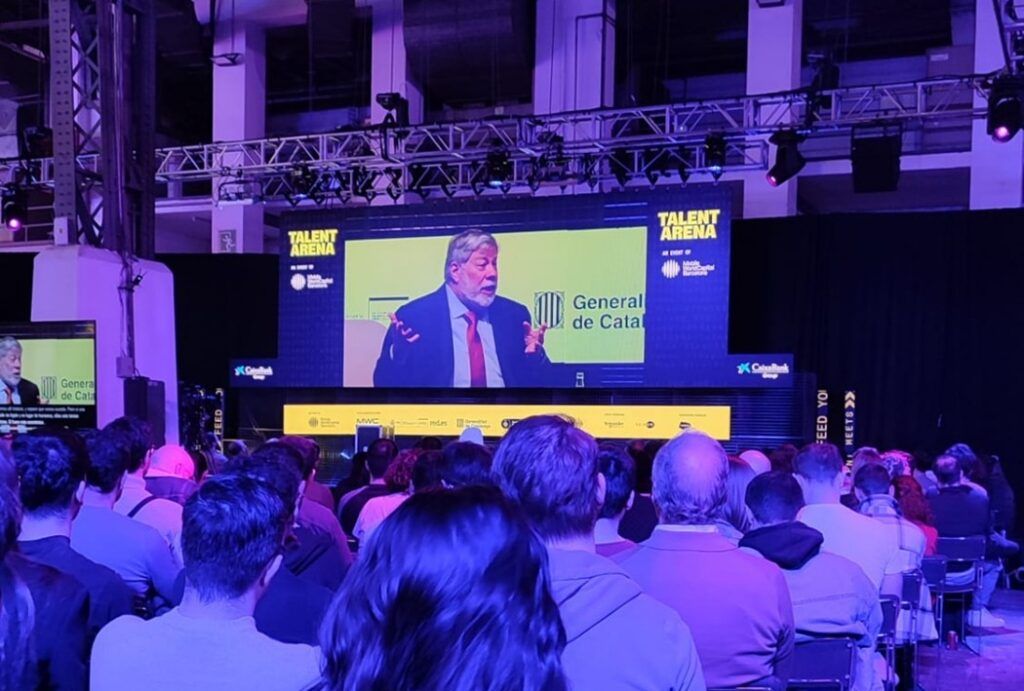
That message echoed in other sessions, including Steve Wozniak’s “Fireside chat: The future and the technology.” This one wasn’t exclusively about AI. It was Wozniak reflecting on many topics and his life, and it was genuinely enjoyable.
When he touched on AI, he called it a powerful tool—not a replacement for humans. Technological advances come with innovation and creativity, and AI still lacks both. Hearing one of the GOATs of our field in person was a fantastic experience.
Content creators conferences
I then attended two sessions from content creators: one by Miguel Ángel Durán (Midudev), one of my favorite programming creators, and another by Carlos Santana (DotCSV), whom I didn’t know but really enjoyed.
Midudev addressed the idea that AI will replace programmers. He argued this is misleading. AI often fails to deliver the best engineering solution, especially when the underlying data is incomplete. He closed with a key point: AI won’t replace jobs, but people who use AI well will.
Carlos Santana focused on AI’s rapid progress. He showed how answer quality is improving while costs are dropping fast, citing DeepSeek as an example. He ended by discussing the ARC-AGI benchmark.
I wasn’t familiar with ARC-AGI. It measures how efficiently AI acquires skills on unknown tasks. Here is the chart showing AI progress on this benchmark:
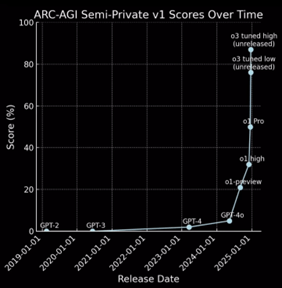
As we saw, AI jumped from 0% to over 85% on this benchmark in just five years. The curve looks exponential. That suggests we still haven’t seen its full potential.
Putting both talks in perspective made me think. Will programmers lose their jobs at some point? Just kidding—but it does make you stop and reflect.
Hacking the reality with AI: from crazy ideas to code that transforms
We also attended “Hacking the reality with AI: from crazy ideas to code that transforms,” by Carlos Polo. The talk was compelling.
He showed how attackers could misuse AI. For example, if a model learns our psychological profile and reads texts we wrote, it could mimic us. It would copy how we communicate and even impersonate us. It could also persuade us in a highly personalized way if someone wanted to sell us something. Fortunately, EU rules aim to limit these risks.
To close, he mapped today’s AI to a problem–solution scale. Right now, many problems are poorly defined. However, the solution—AI—is well defined. As a result, we may see an explosion of new problems that are unknown today, precisely because the solution is so powerful.
AI OS: a new operating system paradigm
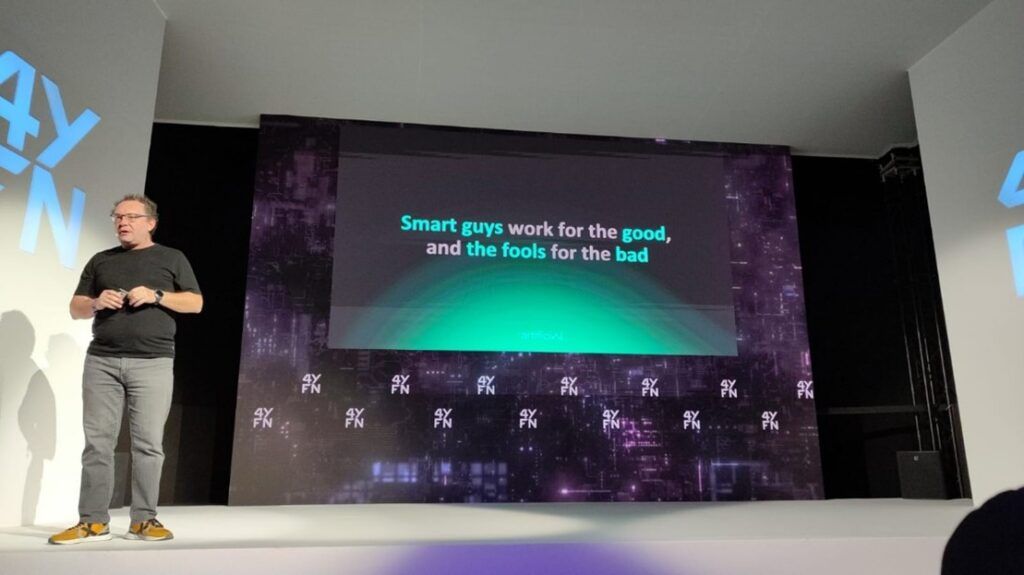
I also attended “AI OS: a new operating system paradigm,” by Aleix Valls Tomás. He opened with a video made using Sora from OpenAI. The clip suggested the model must grasp physics to look realistic. However, we don’t know if it “understands” reality like we do, or if it uses another path to reach the same result.
His core point was clear: by using AI, we are building a new OS—an AI OS. It changes how we operate technology. It also highlights the role of agents to unlock full capabilities through natural language.
Technology innovations
Xiami
Here’s a cleaner, natural rewrite with short sentences:
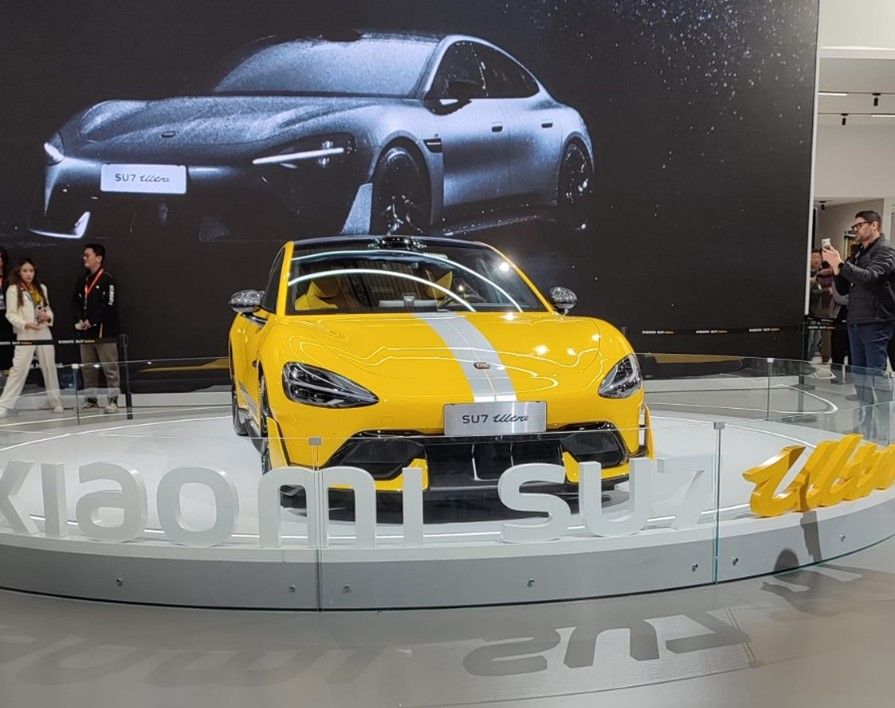
I didn’t know Xiaomi had started manufacturing cars. On site, they showcased the Xiaomi SU7 Ultra, an electric sports car with 1,548 CV. Its estimated range is about 630 km. It fascinates me how the brand has expanded into so many fields—and keeps succeeding in each.
Nokia
We also tried next-gen networking. We got a taste of 6G, expected around 2030, and the capabilities of advanced 5G.
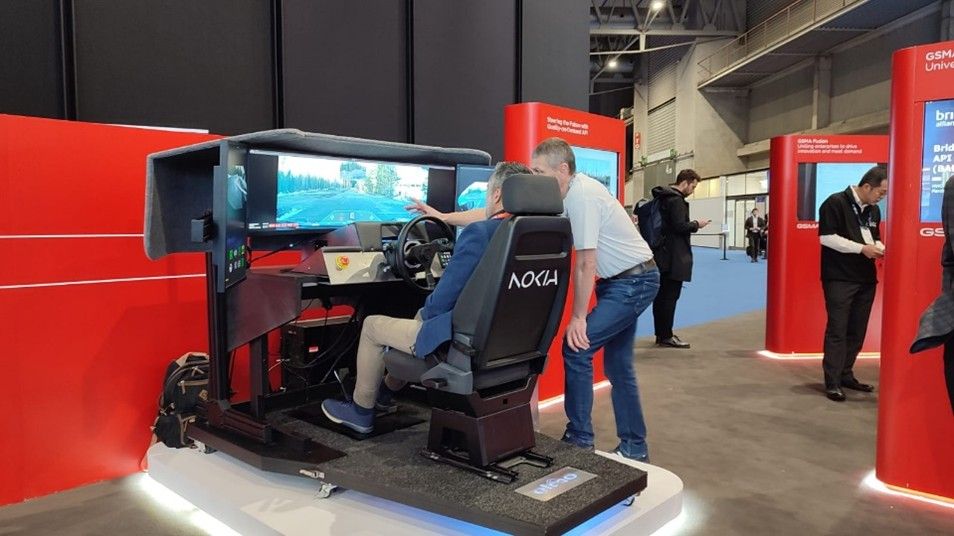
Thanks to GSMA Industry Services, we remotely drove a car in Finland from Barcelona. We used Nokia network APIs and the Quality-on-Demand API to cut latency. The round-trip delay was about 110 ms.
Mobile devices
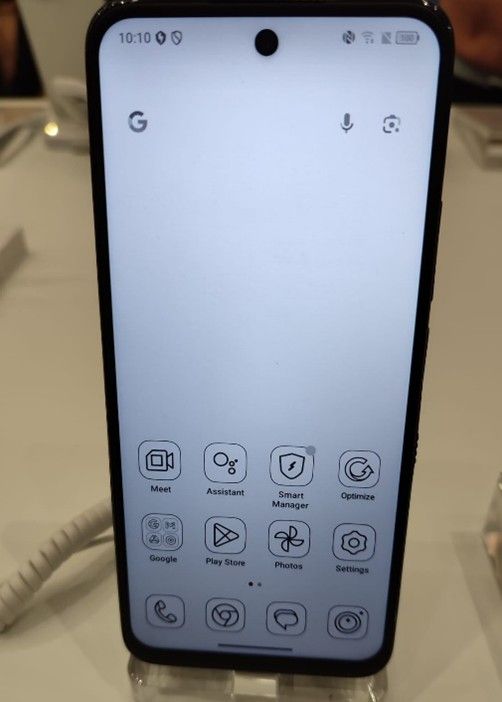
On mobile devices, I want to highlight the TCL phones. They showcased improved displays that reduce visual noise when taking photos. They also include a one-switch read mode, giving Kindle-style usability for long reading sessions.
Additionally, we saw several other innovations. There was a live holographic recording setup. We tested computers with 3D screens. We saw a Lenovo laptop with modular add-ons. And we tried AI-enabled glasses with built-in microphones.
Conclusions of these days
So, what’s ahead? AI is both the present and the future of technology. It’s a tool that can speed up many of our tasks. Over these days, I learned there is still a lot to absorb. Even though progress feels exponential, we are just at the beginning.
Before these events, I saw AI mainly as a coding helper. I knew it appeared in other fields, but I doubted its efficiency. Now I understand the importance of designing good models. They must account for many parameters so no one is left behind.
This MWC was a great experience. Listening to experts and leaders broadened my view of where we are and where we are going. To close, I want to stress that AI is just a tool—albeit a very powerful one. It is not a replacement for humans. As Wozniak put it, “AI is very helpful, but can’t substitute the own substance.”
Bonus pic