
Slovakia e-Invoicing and e-Reporting
Slovakia e-invoicing guide for 2027: eFaktúra, Peppol BIS, XML invoices and e-reporting readiness for SAP and ERP teams.
Let’s talkDigitalizing VAT Compliance through Slovakia’s eFaktúra System
Slovakia’s eFaktúra model will introduce structured electronic invoicing and connected tax data reporting through certified delivery service providers and the Peppol network.
From 1 January 2027, Slovak VAT payers must issue electronic invoices for covered domestic supplies in the prescribed format. Legal entities and taxable persons receiving those invoices must also be able to process them electronically.
Key Implementation Dates
Keep track of key dates and e-invoicing mandates in Slovakia.
01/01/2026
The legislative framework for Slovakia’s eFaktúra system entered into force, opening a transition period until 31 December 2026 in which companies can exchange e-invoices voluntarily through certified delivery service providers.
Q2 2026
The Financial Administration opened online registration in its eFaktúra portal, allowing companies and entrepreneurs to choose a certified delivery service provider and connect to Peppol ahead of the mandate.
01/01/2027
Mandatory structured electronic invoicing takes effect for Slovak VAT payers issuing invoices for covered domestic supplies. Legal entities and taxable persons within the receiving scope must also be able to receive eFaktúra documents. A VAT amendment currently before Parliament proposes temporary penalty relief at the start of 2027, but it would not postpone the obligation.
01/07/2030
The second phase is scheduled to extend electronic invoicing and digital reporting requirements to covered cross-border transactions in line with VAT in the Digital Age (ViDA). From that date, the VAT Control Statement and EC Sales List are scheduled to be abolished.
Slovakia e-Invoicing and e-Reporting Overview
Implementation
Mandatory from 1 January 2027 for covered domestic transactions.
Tax Authority
Financial Administration of the Slovak Republic
Format
Structured XML (UBL or CII) based on EN 16931, exchanged via Peppol BIS Billing 3.0.
Digital Signature
Not mandatory. An electronic signature is one optional way to ensure invoice authenticity and integrity.
Archiving
10 years from the end of the relevant calendar year, in XML format.
Other Slovak regulations
VAT Control Statement, eKasa, EC Sales List and Intrastat-SK Reporting
Prepare for Slovakia e-Invoicing and e-Reporting
Request demoFrequently Asked Questions

What does Slovakia eFaktúra mean for companies operating in Slovakia?
Slovakia’s eFaktúra model requires companies within scope to exchange machine-readable invoices rather than relying on paper or PDF as the compliant invoice format for covered transactions.
Issuers must generate the required structured data, while recipients need systems or certified services capable of receiving and processing it. This affects invoice creation, validation, master data, VAT determination and integration with SAP or other ERP platforms. Invoices must still be issued within 15 days, and invoice data is reported to the Financial Administration through the certified delivery service providers.

When should companies start preparing for Slovakia e-invoicing?
Companies should already be preparing during 2026. Voluntary use has been possible during the 2026 transition period, online registration with certified providers opened in the second quarter, and mandatory domestic e-invoicing begins on 1 January 2027.
Preparation should cover scope analysis, certified delivery provider selection, Peppol connectivity, invoice data, ERP integration, testing, exception handling and user readiness.

Which companies are affected by Slovakia e-invoicing from 2027?
From 1 January 2027, Slovak VAT payers must issue electronic invoices for covered domestic supplies to recipients included in the legal scope.
The receiving obligation is broader: legal entities and taxable persons must be able to receive eFaktúra documents when a VAT payer is required to issue one to them. Non-VAT taxable persons may therefore need reception capability even when they are not required to issue electronic invoices. Penalties for non-compliance can reach EUR 10,000, or EUR 100,000 for repeated breaches.

Will Slovakia e-invoicing affect SAP and ERP systems?
Yes. SAP and ERP systems must generate, receive and process structured invoice data in line with the Slovak technical and legal requirements.
Companies should review invoice mapping, mandatory fields, VAT codes, customer and supplier master data, Peppol identifiers, delivery-provider integration, validation rules, acknowledgements and exception handling.

Is Slovakia e-invoicing only an IT project?
No. IT teams are responsible for connectivity and system integration, but finance, tax, procurement, sales and accounts payable teams must define the underlying invoice rules and operating model.
The project also requires decisions about scope, provider selection, master data, invoice validation, exception management, supplier and customer communication and business continuity.

How can companies prepare their eCompliance roadmap for Slovakia?
Companies should begin by identifying the entities, VAT registrations, domestic transaction flows and document scenarios covered from 2027.
They should then assess ERP readiness, EN 16931 mapping, Peppol connectivity, certified delivery providers, tax data reporting, testing and operational monitoring. The architecture should also consider related Slovak obligations, but these should not be treated as if they form part of the same eFaktúra process.
How Slovakia e-Invoicing and e-Reporting will impact businesses
Slovakia’s eFaktúra requirements will affect invoice generation, reception, tax data reporting and system connectivity across finance and ERP processes.
Code10 helps organizations prepare for the 2027 mandate by assessing regulatory impact, identifying SAP and integration gaps, defining structured invoice flows and connecting Peppol-based processes with the wider eCompliance architecture.
Where standard SAP capabilities do not fully cover local requirements, we complement them through our eCompliance Hub and tailored integrations, keeping the solution scalable and maintainable for future Slovak and European reporting obligations.
Contact Code10
Request demoMore Related Topics

Global Document Compliance Strategy | Code10 TechTalks 2026
How to build one scalable eCompliance strategy for SAP: DRC, the Code10 eCompliance Hub and eCompliance as a Service, ready for ViDA and new mandates.

Global e-Invoicing and Document Compliance from SAP
Access Code10’s webinar and learn how to build a global eCompliance strategy for SAP e-invoicing, SAP DRC and document compliance.
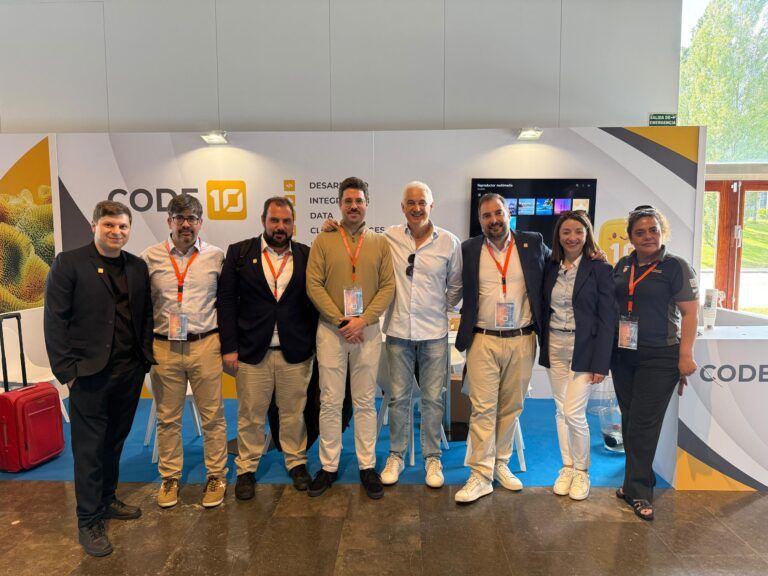
Forum AUSAPE 2026: What SAP Leaders Are Prioritizing for 2027
Each organization is unique and has its own challenges. But the same strategic priorities came out in conversations we had during the Forum AUSAPE 2026. See what SAP leaders, IT teams, business stakeholders and digital transformation experts from many industries are focusing on
Last Call for France’s e-Invoicing Mandate [Webinar]
Code10’s eCompliance expert and Product Owner, Ana Shopovski, and ecosio’s Partner Manager, Débora C. Pereira, explore the changes introduced by […]
Code10 Tech Brief: Relevant Updates for Better Decisions
We are launching the Code10 Tech Brief, a monthly newsletter that supports organisations in taking confident, better decisions
Countdown: KSeF and SAF-T roll-out in Poland [Webinar]
KSeF (Krajowy System e-Faktur), Poland’s National System of Electronic E-invoicing, entered into force on 1 February 2026 for large companies […]
Code10 launches Billivo for VeriFactu compliance
Billivo for VeriFactu is our new invoicing platform for Spain. Built by Code10, it helps freelancers and small businesses meet VeriFactu compliance without changing their process. Learn why we launched it, how it works, and how it supports Spain’s invoicing regulation.
Safe and simple e-invoicing in SAP: Code10 and ecosio partner to provide an accelerated SAP e-invoicing solution
Together with ecosio, leading provider of B2B integration, Code10 developed a solution that allows companies to connect with government platforms and meet authorities’ standards for tax reporting
SAP implementation of KSeF and SAF-T in Poland: new requirements coming soon [webinar]
In this webinar, we explain how to implement standard SAP and customised solutions to comply with the latest changes in the regulatory scenario.