
Slovakia EC Sales List
Slovakia EC Sales List guide for SAP and ERP teams: intra-EU VAT reporting, recapitulative statements and cross-border data quality.
Let’s talkReporting Intra-EU VAT Transactions through Slovakia’s EC Sales List
Slovakia’s EC Sales List, known locally as Súhrnný výkaz k DPH, is the electronic VAT recapitulative statement used to report qualifying intra-EU transactions.
It applies to VAT payers and certain other VAT-registered taxable persons carrying out reportable supplies of goods, B2B services, triangular transactions or call-off stock movements. Accurate VAT IDs, transaction values and supply classifications are essential for consistent reporting.
Key Implementation Dates
Keep track of key dates and reporting obligations for the Slovakia EC Sales List
01/05/2004
Slovakia’s VAT Act entered into force with the recapitulative statement requirement for qualifying intra-EU supplies.
01/01/2010
The reporting scope expanded to include qualifying B2B services supplied to customers in other EU Member States.
01/01/2020
Call-off stock transactions were added to the EC Sales List reporting framework and the updated SVDPHv20 form entered use.
01/07/2030
Slovakia’s current EC Sales List framework is scheduled to be replaced by transaction-level digital reporting for covered cross-border transactions under the VAT in the Digital Age model. The EC Sales List is scheduled to be abolished from that date.
Slovakia EC Sales List Overview
Implementation
In force since 2004 for qualifying intra-EU transactions
Tax Authority
Financial Administration of the Slovak Republic (Finančná správa SR)
Format
Electronic SVDPHv20 recapitulative statement
Digital Signature
Qualified electronic signature, or electronic submission under a written e-delivery agreement with the tax authority
Archiving
Supporting VAT invoices and records: generally 10 years
Other Slovak regulations
Slovakia eFaktúra, VAT Control Statement, eKasa and Intrastat-SK Reporting
Strengthen Slovakia EC Sales List reporting
Request demoFrequently Asked Questions
What is the Slovakia EC Sales List?
The Slovakia EC Sales List is the electronic VAT recapitulative statement used to report qualifying transactions with customers or business partners in other EU Member States.
Unlike the domestic VAT Control Statement, it focuses on cross-border EU activity such as intra-EU supplies of goods, selected B2B services, triangular trade and call-off stock movements.

Which companies need to submit the Slovakia EC Sales List?
VAT payers must submit the EC Sales List when they carry out reportable intra-EU supplies covered by §80 of the Slovak VAT Act.
Certain taxable persons registered under §§7 or 7a may also need to file, particularly when supplying qualifying B2B services to another EU Member State or participating in triangular trade.
What transactions are included in the Slovakia EC Sales List?
Reportable transactions include exempt intra-EU supplies of goods, transfers of own goods to another Member State, triangular trade, qualifying B2B services subject to reverse charge and call-off stock movements.
Correct VAT IDs, transaction values and reporting codes are essential because each category follows its own reporting treatment.

When is the Slovakia EC Sales List submitted?
The EC Sales List must be submitted electronically within 25 days after the end of the relevant reporting period.
VAT payers generally file monthly, but quarterly filing is allowed when qualifying goods supplies do not exceed EUR 50,000 in the current quarter or any of the previous four quarters. The value of reportable services does not count towards this threshold.

Is the Slovakia EC Sales List the same as the VAT Control Statement or Intrastat?
No. The three obligations serve different purposes.
The EC Sales List reports qualifying intra-EU VAT transactions. The VAT Control Statement provides detailed domestic VAT transaction data, while Intrastat-SK collects statistical information on intra-EU movements of goods.
Although they may use overlapping ERP and master data, they remain separate reporting obligations.

How should companies manage the Slovakia EC Sales List in SAP or ERP systems?
Companies should review intra-EU transaction flows, customer VAT IDs, tax codes, country logic and reporting classifications before generating the EC Sales List.
In SAP or ERP environments, reconciliation with VAT reporting and correct treatment of triangular trade, services and call-off stock are particularly important. The architecture should also be flexible enough to support the move towards transaction-level digital reporting from 2030.
Managing Slovakia EC Sales List Reporting in SAP
Reliable EC Sales List reporting depends on accurate VAT IDs, transaction classification and consistent cross-border data across finance and ERP systems.
Code10 helps organizations assess Slovak reporting requirements, validate SAP and ERP logic, automate recurring reporting flows and identify gaps across complex intra-EU scenarios.
As Slovakia prepares to move towards transaction-level cross-border reporting from 2030, we also help companies build an eCompliance architecture that can adapt to future ViDA requirements.
Contact Code10
Request demoMore Related Topics
Global Document Compliance Strategy | Code10 TechTalks 2026
How to build one scalable eCompliance strategy for SAP: DRC, the Code10 eCompliance Hub and eCompliance as a Service, ready for ViDA and new mandates.
Global e-Invoicing and Document Compliance from SAP
Access Code10’s webinar and learn how to build a global eCompliance strategy for SAP e-invoicing, SAP DRC and document compliance.
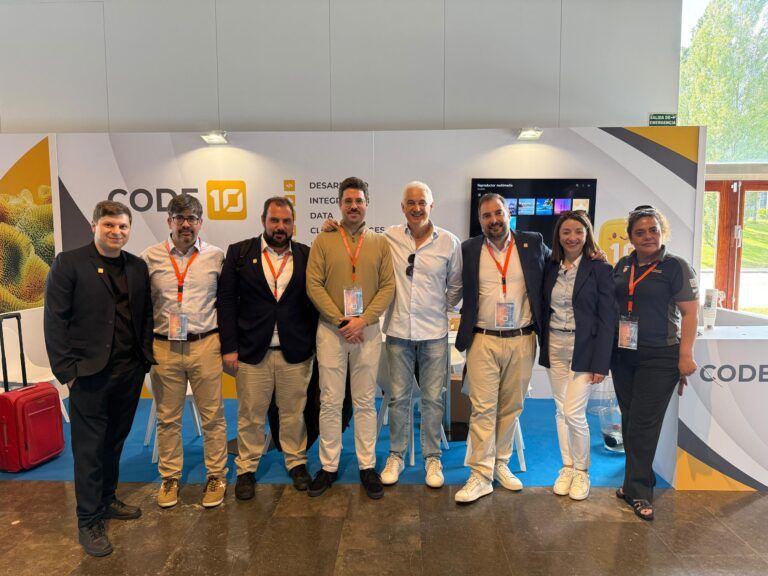
Forum AUSAPE 2026: What SAP Leaders Are Prioritizing for 2027
Each organization is unique and has its own challenges. But the same strategic priorities came out in conversations we had during the Forum AUSAPE 2026. See what SAP leaders, IT teams, business stakeholders and digital transformation experts from many industries are focusing on
Last Call for France’s e-Invoicing Mandate [Webinar]
Code10’s eCompliance expert and Product Owner, Ana Shopovski, and ecosio’s Partner Manager, Débora C. Pereira, explore the changes introduced by […]
Code10 Tech Brief: Relevant Updates for Better Decisions
We are launching the Code10 Tech Brief, a monthly newsletter that supports organisations in taking confident, better decisions
Countdown: KSeF and SAF-T roll-out in Poland [Webinar]
KSeF (Krajowy System e-Faktur), Poland’s National System of Electronic E-invoicing, entered into force on 1 February 2026 for large companies […]
Code10 launches Billivo for VeriFactu compliance
Billivo for VeriFactu is our new invoicing platform for Spain. Built by Code10, it helps freelancers and small businesses meet VeriFactu compliance without changing their process. Learn why we launched it, how it works, and how it supports Spain’s invoicing regulation.
Safe and simple e-invoicing in SAP: Code10 and ecosio partner to provide an accelerated SAP e-invoicing solution
Together with ecosio, leading provider of B2B integration, Code10 developed a solution that allows companies to connect with government platforms and meet authorities’ standards for tax reporting
SAP implementation of KSeF and SAF-T in Poland: new requirements coming soon [webinar]
In this webinar, we explain how to implement standard SAP and customised solutions to comply with the latest changes in the regulatory scenario.