
Slovakia VAT Control Statement
Slovakia VAT Control Statement guide for SAP and ERP teams: XML reporting, VAT data quality and recurring compliance requirements.
Let’s talkDigitalizing VAT Transaction Reporting through Slovakia’s VAT Control Statement
Slovakia’s VAT Control Statement, known locally as Kontrolný výkaz DPH, is a detailed electronic reporting obligation for VAT payers. It covers individual VAT liabilities and deductions based on issued invoices, received invoices, simplified invoices and other relevant documents.
Key Implementation Dates
Keep track of key dates and reporting obligations for the Slovakia VAT Control Statement.
01/01/2014
The VAT Control Statement became mandatory for Slovak VAT payers under Section 78a of the VAT Act.
01/07/2030
The VAT Control Statement is scheduled to be abolished with the second phase of Slovakia’s eFaktúra model, when e-invoicing and digital reporting extend to cross-border transactions.
Slovakia VAT Control Statement Overview
Implementation
Mandatory since 1 January 2014 for VAT payers in scope; scheduled to be abolished from 1 July 2030.
Tax Authority
Financial Administration of the Slovak Republic
Format
Structured electronic submission in XML format.
Digital Signature
Qualified electronic signature or recognized electronic authorization, unless a valid electronic delivery agreement applies.
Archiving
Supporting VAT records and invoices: generally 10 years
Other Slovak regulations
Slovakia eFaktúra, eKasa, EC Sales List and Intrastat-SK Reporting
Automate Slovakia VAT Control Statement reporting
Request demoFrequently Asked Questions

What is the Slovakia VAT Control Statement?
The Slovakia VAT Control Statement is a detailed electronic report submitted by VAT payers to the Financial Administration. It contains transaction-level information on VAT liabilities and deductions for the relevant tax period.
Unlike the VAT return, it provides detailed information from individual invoices and other VAT-relevant documents rather than only aggregated totals.

Which companies need to submit the Slovakia VAT Control Statement?
The obligation generally applies to VAT payers registered in Slovakia under the relevant provisions of the VAT Act when they are required to file a VAT return for the tax period.
This includes domestic and qualifying foreign VAT-registered businesses, although specific transactions and situations may be excluded from the statement.

Is the Slovakia VAT Control Statement the same as SAF-T?
No. Slovakia’s VAT Control Statement is a transaction-level VAT report, while SAF-T is a broader audit file that can contain accounting, invoice, payment, asset or inventory data depending on the jurisdiction.
Slovakia does not use the VAT Control Statement as a SAF-T file; the two concepts should therefore be treated separately.

When is the Slovakia VAT Control Statement submitted?
The VAT Control Statement must generally be submitted electronically within 25 days after the end of the relevant VAT period, and no later than the deadline for the corresponding VAT return.
The reporting period can be monthly or quarterly depending on the taxpayer’s VAT period.

What data is included in the Slovakia VAT Control Statement?
The statement includes detailed information from issued and received invoices, simplified invoices, corrective documents and other records linked to VAT liabilities or input VAT deductions.
The XML is divided into sections covering output transactions, input transactions, corrections and other reportable VAT records.

How should companies manage the Slovakia VAT Control Statement in SAP or ERP systems?
Companies should ensure that VAT codes, invoice references, business partner data and transaction values are correctly captured before the XML report is generated.
In SAP environments, this means reviewing statutory reporting coverage, mapping rules, validations and reconciliation between the VAT return and VAT Control Statement before submission.
How the Slovakia VAT Control Statement will impact businesses
Reliable VAT Control Statement reporting depends on consistent tax codes, invoice data, business partner information and reconciliation with the underlying VAT records.
Code10 helps organizations assess SAP reporting coverage, identify data or configuration gaps, automate XML generation and implement validation controls before submission.
Where standard SAP capabilities do not fully meet local requirements, we complement them through our eCompliance Hub and tailored integrations to maintain a scalable and controlled reporting process.
Contact Code10
Request demoMore Related Topics
Global Document Compliance Strategy | Code10 TechTalks 2026
How to build one scalable eCompliance strategy for SAP: DRC, the Code10 eCompliance Hub and eCompliance as a Service, ready for ViDA and new mandates.
Global e-Invoicing and Document Compliance from SAP
Access Code10’s webinar and learn how to build a global eCompliance strategy for SAP e-invoicing, SAP DRC and document compliance.
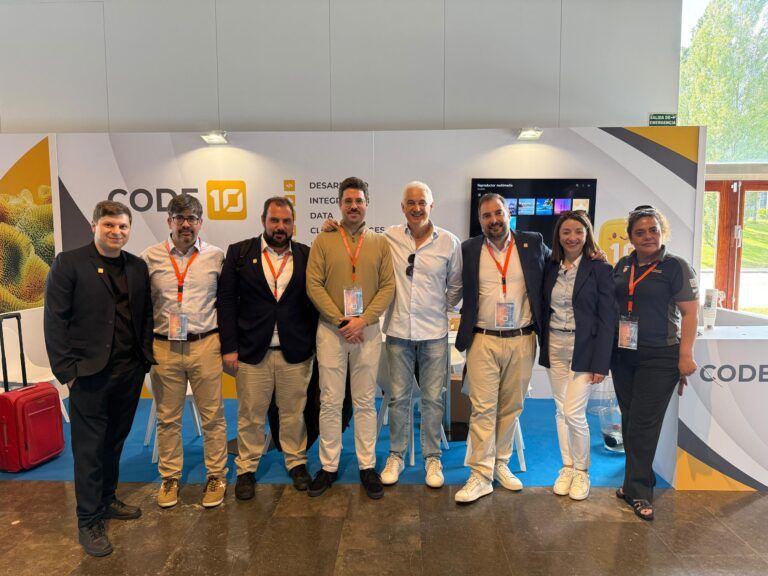
Forum AUSAPE 2026: What SAP Leaders Are Prioritizing for 2027
Each organization is unique and has its own challenges. But the same strategic priorities came out in conversations we had during the Forum AUSAPE 2026. See what SAP leaders, IT teams, business stakeholders and digital transformation experts from many industries are focusing on
Last Call for France’s e-Invoicing Mandate [Webinar]
Code10’s eCompliance expert and Product Owner, Ana Shopovski, and ecosio’s Partner Manager, Débora C. Pereira, explore the changes introduced by […]
Code10 Tech Brief: Relevant Updates for Better Decisions
We are launching the Code10 Tech Brief, a monthly newsletter that supports organisations in taking confident, better decisions
Countdown: KSeF and SAF-T roll-out in Poland [Webinar]
KSeF (Krajowy System e-Faktur), Poland’s National System of Electronic E-invoicing, entered into force on 1 February 2026 for large companies […]
Code10 launches Billivo for VeriFactu compliance
Billivo for VeriFactu is our new invoicing platform for Spain. Built by Code10, it helps freelancers and small businesses meet VeriFactu compliance without changing their process. Learn why we launched it, how it works, and how it supports Spain’s invoicing regulation.
Safe and simple e-invoicing in SAP: Code10 and ecosio partner to provide an accelerated SAP e-invoicing solution
Together with ecosio, leading provider of B2B integration, Code10 developed a solution that allows companies to connect with government platforms and meet authorities’ standards for tax reporting
SAP implementation of KSeF and SAF-T in Poland: new requirements coming soon [webinar]
In this webinar, we explain how to implement standard SAP and customised solutions to comply with the latest changes in the regulatory scenario.