
Slovakia eKasa: Online Cash Register Compliance
Slovakia eKasa guide for POS, ERP and finance teams: online cash register rules, fiscalization, revenue registration and 2026 updates.
Let’s talkFiscalizing B2C and Point-of-Sale Revenue in Slovakia
eKasa is Slovakia’s electronic revenue registration system for sellers receiving qualifying payments for goods or services at the point of sale. It connects registered cash register solutions with the Slovak Financial Administration so that transaction data can be recorded electronically.
The system is particularly relevant for retail, hospitality, services and other customer-facing operations. Since 2026, its scope has expanded significantly, making payment flows, receipt issuance and POS compliance relevant to a wider range of businesses.
Key Implementation Dates
Keep track of key dates and fiscalization requirements for Slovakia eKasa
01/04/2019
eKasa entered live operation and became mandatory for sellers whose revenue registration obligation arose for the first time from this date.
01/07/2019
eKasa became mandatory for all sellers subject to the existing cash register revenue registration rules.
01/01/2026
Act No. 384/2025 on Revenue Registration entered into force, replacing the previous cash register legislation and significantly expanding the scope of eKasa revenue registration.
01/05/2026
Sellers subject to eKasa revenue registration must offer at least one cashless payment option for transactions exceeding EUR 1, subject to the statutory exceptions.
Slovakia eKasa Overview
Implementation
Mandatory since 2019; scope significantly expanded from 1 January 2026
Tax Authority
Financial Administration of the Slovak Republic (Finančná správa SR)
Format
Electronic transaction data transmitted through registered eKasa cash registers
Digital Signature
No separate transaction-level digital signature requirement
Archiving
Printed receipts must remain legible for 5 years from the end of the calendar year
Other Slovak regulations
Slovakia eFaktúra, VAT Control Statement, EC Sales List and Intrastat-SK Reporting
Prepare your systems for B2C Slovakia eKasa compliance
Request demoFrequently Asked Questions
What is Slovakia eKasa?
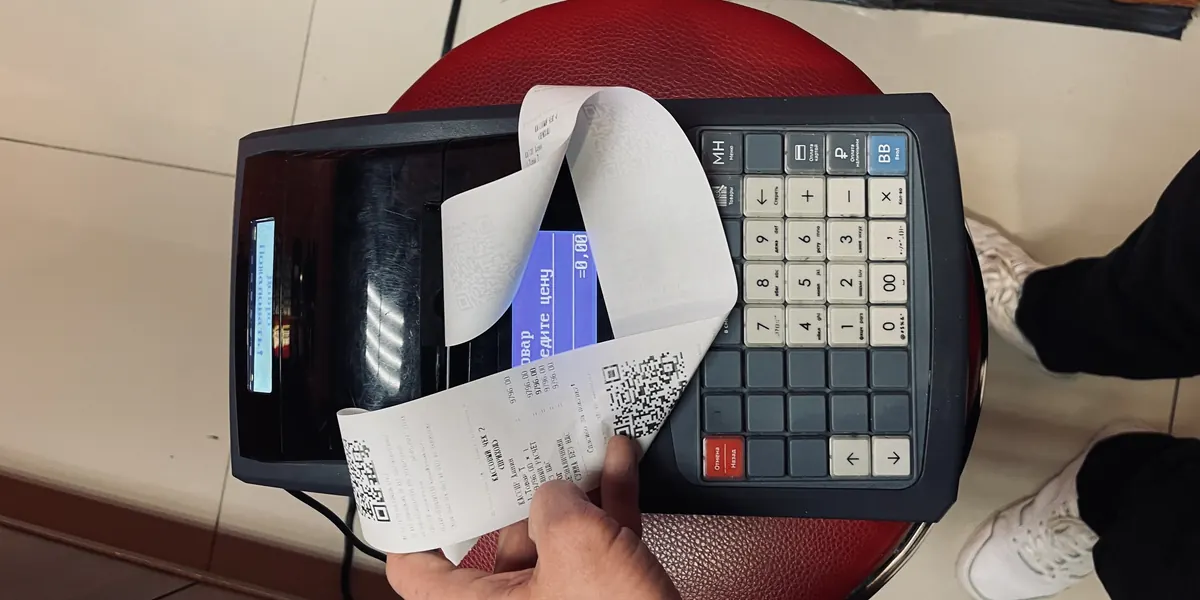
eKasa is Slovakia’s electronic system for recording qualifying revenue received by sellers at the point of sale. Registered cash register solutions communicate transaction data with the Financial Administration and generate a compliant receipt for the buyer.
It is a fiscalization and revenue registration requirement rather than an electronic invoicing mandate. Its main impact is therefore on POS, payment and receipt processes rather than B2B invoice exchange.

Which businesses are affected by Slovakia eKasa?
The obligation applies to sellers receiving qualifying revenue from the sale of goods or provision of services at a sales point. Since 1 January 2026, the scope has been expanded to cover a much broader range of services, including activities that were previously excluded.
Payments transferred directly from the buyer’s bank account to the seller’s account outside the sales point, for example on the basis of an invoice, are generally not treated as eKasa revenue for that transaction. Specific statutory exemptions also remain in place.

What changed for Slovakia eKasa from 2026?
Act No. 384/2025 introduced a new legal framework for revenue registration from 1 January 2026. It replaced the previous cash register law and expanded eKasa coverage, particularly across services that had previously benefited from exclusions.
The law also regulates online, software-based and virtual eKasa cash registers, transaction data transmission, certification requirements and operational controls. For companies with customer-facing sales, the 2026 reform therefore requires a fresh review of POS and payment flows rather than simply maintaining the setup used since 2019.

Does Slovakia eKasa require cashless payment options?
Yes. Since 1 May 2026, sellers subject to eKasa revenue registration must offer buyers at least one cashless payment method for transactions exceeding EUR 1.
This does not require a traditional card terminal. Businesses can use options such as card payments, QR payments, a QR code generated by the eKasa system, bank-app QR codes or other supported account-based payment methods.
The obligation does not apply where the seller has an authorized deferral from online eKasa transmission. It may also be temporarily waived when internet connectivity or the technical services needed to confirm the cashless payment are unavailable.

How does eKasa affect POS, ERP and finance systems?
eKasa primarily affects POS and customer-facing payment systems. Businesses need to ensure that qualifying revenue is recorded correctly, compliant receipts are generated and required transaction data is transmitted through an approved eKasa solution.
Where POS data also feeds SAP, ERP or accounting platforms, payment methods, tax information and transaction records should remain consistent across front-office and back-office systems.

How should companies prepare for Slovakia eKasa compliance?
Companies should begin by mapping their B2C and point-of-sale revenue flows in Slovakia, including stores, hospitality locations, service points, mobile sales and other customer-facing scenarios.
They should then identify which payments fall within eKasa scope, review approved cash register solutions, cashless payment options, receipt processes and exception handling, and confirm how POS data connects with SAP, ERP or finance systems.
Integrating Slovakia eKasa across POS and ERP Systems
eKasa compliance depends on reliable coordination between customer-facing sales, payment acceptance, receipt generation and back-office transaction data.
Code10 helps organizations assess how the requirement affects their POS, SAP and ERP landscape, identify integration gaps and connect fiscal transaction flows with wider finance processes.
Through tailored integration and our eCompliance Hub, we help maintain consistent data and controlled processes across eKasa and Slovakia’s wider compliance architecture.
Contact Code10
Request demoMore Related Topics

Global Document Compliance Strategy | Code10 TechTalks 2026
How to build one scalable eCompliance strategy for SAP: DRC, the Code10 eCompliance Hub and eCompliance as a Service, ready for ViDA and new mandates.
Global e-Invoicing and Document Compliance from SAP
Access Code10’s webinar and learn how to build a global eCompliance strategy for SAP e-invoicing, SAP DRC and document compliance.

Forum AUSAPE 2026: What SAP Leaders Are Prioritizing for 2027
Each organization is unique and has its own challenges. But the same strategic priorities came out in conversations we had during the Forum AUSAPE 2026. See what SAP leaders, IT teams, business stakeholders and digital transformation experts from many industries are focusing on
Last Call for France’s e-Invoicing Mandate [Webinar]
Code10’s eCompliance expert and Product Owner, Ana Shopovski, and ecosio’s Partner Manager, Débora C. Pereira, explore the changes introduced by […]
Code10 Tech Brief: Relevant Updates for Better Decisions
We are launching the Code10 Tech Brief, a monthly newsletter that supports organisations in taking confident, better decisions
Countdown: KSeF and SAF-T roll-out in Poland [Webinar]
KSeF (Krajowy System e-Faktur), Poland’s National System of Electronic E-invoicing, entered into force on 1 February 2026 for large companies […]
Code10 launches Billivo for VeriFactu compliance
Billivo for VeriFactu is our new invoicing platform for Spain. Built by Code10, it helps freelancers and small businesses meet VeriFactu compliance without changing their process. Learn why we launched it, how it works, and how it supports Spain’s invoicing regulation.
Safe and simple e-invoicing in SAP: Code10 and ecosio partner to provide an accelerated SAP e-invoicing solution
Together with ecosio, leading provider of B2B integration, Code10 developed a solution that allows companies to connect with government platforms and meet authorities’ standards for tax reporting
SAP implementation of KSeF and SAF-T in Poland: new requirements coming soon [webinar]
In this webinar, we explain how to implement standard SAP and customised solutions to comply with the latest changes in the regulatory scenario.